What Is the Difference Between OEM and ODM in Clothing Manufacturing?

What Is OEM Clothing Manufacturing?
OEM (Original Equipment Manufacturing) means the factory produces garments strictly according to your original design and specifications. You bring the creative direction — the silhouette, measurements, fabrics, trims, and construction details — and the manufacturer turns your tech pack into finished garments. The design intellectual property belongs to you, which makes OEM the standard route for brands that compete on originality.
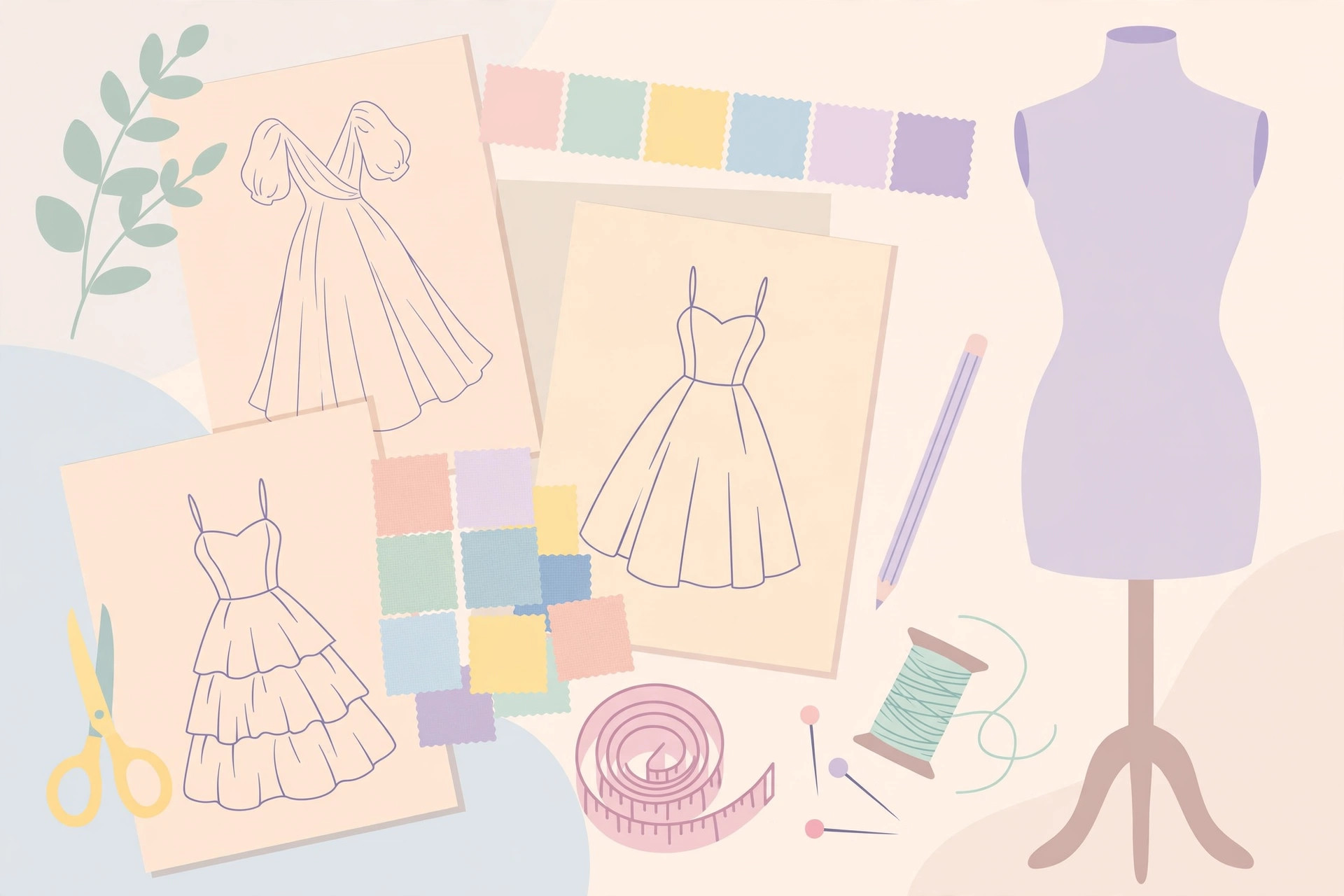
In practice, an OEM order starts with your tech pack: flat sketches, a bill of materials, size measurements, and stitching requirements. The factory then sources the specified fabrics, develops a prototype sample, and revises it until you approve it. Only after sample approval does bulk production begin. Because every detail is custom, OEM development takes longer and usually carries a higher minimum order quantity than off-the-shelf options — but the result is a product no competitor can buy from the same shelf. If you are preparing your first tech pack, our custom dress design guide walks through the key specification elements factories need from you.
What Is ODM Clothing Manufacturing?
ODM (Original Design Manufacturing) means you select from the factory’s existing, ready-made designs and sell them under your own brand label. The factory’s design team has already done the creative work — developing silhouettes, grading sizes, and testing fabrics — and you simply choose the styles, colors, and sizes that fit your boutique’s assortment, adding your private label and packaging.
ODM is essentially the wholesale/private-label model most boutiques start with. There is no design phase to fund and no prototype cycle to wait through, so you can move from selection to delivery far faster and with far less upfront investment. The trade-off is exclusivity: other buyers may carry similar styles, so your differentiation comes from curation, branding, and customer experience rather than the garment design itself. Shivette’s wholesale catalog of 107 women’s styles works exactly as an ODM library — every piece can be ordered with your own labels at MOQs as low as 10 pieces per style.
OEM vs ODM: Key Differences at a Glance
The core difference is who creates the design — you in OEM, the factory in ODM — and that single choice drives cost, timeline, and order requirements. The table below summarizes how the two models compare for a women’s apparel brand:
| Factor | OEM | ODM |
|---|---|---|
| Design ownership | You — your original designs, your IP | Factory — you license designs for your label |
| Development time | Longer (design + sampling cycles) | Shorter (styles already developed) |
| Upfront investment | Higher (tech pack, samples, development) | Lower (no design costs) |
| Typical MOQ | Higher, varies by complexity | Lower — from 10 pieces per style at some factories |
| Product uniqueness | Exclusive to your brand | Shared with other buyers |
| Best for | Brands competing on original design | Boutiques prioritizing speed and low risk |
Which Model Should Your Boutique Choose?
Choose ODM if you need speed, low upfront cost, and minimal risk; choose OEM if original design is your competitive advantage and you can invest in development. Most successful small boutiques do not treat this as an either-or decision — they blend both models across their assortment.
A practical approach: use ODM styles for proven bestsellers and seasonal fill-ins, where speed to market matters most, and reserve OEM development for a small number of signature pieces that define your brand identity. New brands with limited capital often start 100% ODM, learn what their customers actually buy, and then reinvest profits into OEM development for their second or third season. Whatever mix you choose, confirm the factory’s MOQ policy in writing before you commit — our MOQ and sample order guide explains how minimums affect your per-unit cost.
How Does the OEM Process Work, Step by Step?
A typical OEM order moves through six stages: tech pack, fabric sourcing, sampling, sample approval, bulk production, and final quality inspection before shipping. Understanding each stage helps you plan realistic timelines and avoid the delays that frustrate first-time importers.
1. Tech pack and quotation
You submit detailed specifications — sketches, measurements, fabrics, trims, and packaging requirements. The factory reviews feasibility and returns a quotation with MOQ, unit price, and estimated timeline. Vague tech packs are the number one cause of quotation delays, so precision here saves weeks later.
2. Fabric and trim sourcing
The factory sources your specified materials or proposes equivalents at different price points. If you are unsure which fabric suits your design, review our fabric guide for women’s apparel before locking in materials — fabric choice affects drape, cost, and care labeling.
3. Prototype sampling
The factory sews a first sample for your review. Expect at least one to two rounds of revisions on fit, construction, and detailing before the sample matches your vision.
4. Pre-production sample approval
Once the prototype is approved, a pre-production sample is made using the actual bulk fabrics and trims. This is your last checkpoint — approve it in writing, because bulk production will replicate exactly what you sign off here.
5. Bulk production
After you confirm the deposit, the factory cuts, sews, and finishes your full order. Bulk production commonly takes around 30 days from deposit confirmation for standard dress orders, though complex designs or peak seasons can extend this.
6. Quality inspection and shipping
Finished garments go through inline and final inspections for measurements, stitching, and defects before packing. Then choose your freight method based on budget and urgency — see our worldwide shipping guide for delivery methods and typical transit times.
3 Costly Mistakes New Brands Make with OEM and ODM
Most OEM and ODM problems trace back to three avoidable mistakes: vague specifications, skipped samples, and unrealistic timelines. Each one is cheap to prevent and expensive to fix after bulk production starts.
First, never start OEM production from reference photos alone — a proper tech pack with graded measurements is the only specification a factory can quote and execute accurately. Second, never skip the pre-production sample to “save time”; the small sampling fee is insurance against an entire bulk order of unsellable garments. Third, work backward from your in-store date: add sampling time, roughly 30 days of bulk production, inspection, and international transit — then add a buffer. Brands that plan only for production time routinely miss their selling season.
Frequently Asked Questions
Is OEM more expensive than ODM?
Upfront, yes — OEM requires investment in design development and sampling that ODM avoids. Per unit at large volumes, however, OEM can become cheaper because you control every cost input, from fabric to construction. ODM’s advantage is low startup cost and speed, not necessarily the lowest long-term unit price.
What is the minimum order quantity for OEM dresses?
It varies by factory and design complexity. For ODM/private-label styles, some Guangzhou factories accept orders as low as 10 pieces per style. Custom OEM orders typically require higher minimums because the factory must amortize sampling and setup work — always confirm the exact MOQ in your quotation.
Can I mix OEM and ODM styles in one order?
Yes, and many boutiques do exactly that. A common strategy is pairing a few exclusive OEM signature pieces with ODM bestsellers that fill out the assortment quickly. Just confirm that both order types can ship together to save on freight.
Who owns the design in OEM vs ODM?
In OEM, you own the designs you created — the factory manufactures them exclusively for you under a manufacturing agreement. In ODM, the designs remain the factory’s property; you purchase the right to sell them under your own brand label, and other buyers may offer similar styles.
How long does OEM production take from start to finish?
Plan for one to two weeks of sampling and revisions, then around 30 days of bulk production after your deposit is confirmed, plus international shipping time. A realistic end-to-end timeline for a first OEM dress order is typically 6–10 weeks from approved tech pack to delivery at your door.
Whether you start with ready-made ODM styles or invest in original OEM development, the right manufacturing partner makes the difference. Browse our 107-style wholesale catalog to see what is available for immediate private-label ordering, or contact us to discuss a custom OEM project for your boutique.


